Ask a question - solve a problem
“We make our world significant by the courage of our questions and by the depth of our answers.” - Carl Sagan
The origin story of Spirits of the West is one rooted in curiosity. It’s a story rooted in possibility, in wonder, in the belief that building a good business, much like living a good life, demands that you undertake a relentless cycle of asking questions and solving problems.
Ask a question.
Solve a problem.
Repeat.
Asking is learning. Solving is doing. Carl Sagan doesn’t just encourage us to ask questions, he encourages us to find answers too. This is the continuous, iterative loop of building an early stage business. You are both the visionary and the janitor. You take the trash out and you go to the investor meetings.
On any given day, you might be thinking about brand strategy, cash flow, regulations, margins, or whether anyone will actually buy the thing you have spent an unreasonable amount of time convincing yourself should exist. Then you realize that your 2nd grader has an early dismissal. Or that the laundry has been sitting in the washing machine since yesterday. Or you signed up to bring food to the teacher appreciation potluck and haven’t bought a damn thing that you said you would bring.
This is perhaps the part of entrepreneurship we talk about less but it’s the part that matters the most. It’s the part that shapes the representation of entrepreneurs in the world. It’s the reason that startups founded entirely by women receive less than 2%of US venture capital dollars. You don’t get to put the rest of your life on hold while you build something. And us Moms have a whole lotta life depending on us.
Over the last year, while building Spirits of the West, I’ve realized that there is no clean stretch of time during which you suddenly become a Founder, unencumbered by the ordinary responsibilities of being a person and a parent. You build the company in the margins and in the middle of everything else. You answer emails from the grocery store parking lot. You think through pricing while making dinner. You wake up at 3:00 a.m. with the solution to a problem you couldn’t solve at 3:00 p.m. You move constantly between the consequential and the completely mundane.
And maybe that is part of what makes it interesting.
Building a company has a way of exposing the distance between what you know and what you thought you knew. Every answer seems to uncover three more questions. How do you make a shelf-stable cocktail? How do you manufacture a can that doesn't quite exist yet? How does alcohol distribution actually work? How much will someone pay for this? How much will it cost us to make? What happens if we're wrong?
And then there are the harder questions, the ones that can’t be answered with spreadsheets.
Is this worth doing?
Am I willing to keep going when it gets difficult?
How much uncertainty can I tolerate?
How do I build something ambitious without letting it consume everything else that matters to me?
I don't have particularly satisfying answers to those questions yet. I suspect that's the point.
There is something deeply uncomfortable—and deeply wondrous—about choosing to build something without knowing exactly how it will turn out. This is the whole magically terrifying nature of being a parent too- you put all you’ve got- your energy, time, money, love, attention, affection into a container with no idea what will grow inside. You have to become comfortable living somewhere between conviction and uncertainty. You have to believe strongly enough in an idea to keep moving it forward, while remaining humble enough to admit when you're wrong.
Maybe that's what curiosity really asks of us. Not simply that we wonder, but that we are willing to follow the mystery wherever it leads and that we have the courage to actually try. To change course when we need to. To ask a better question the next time.
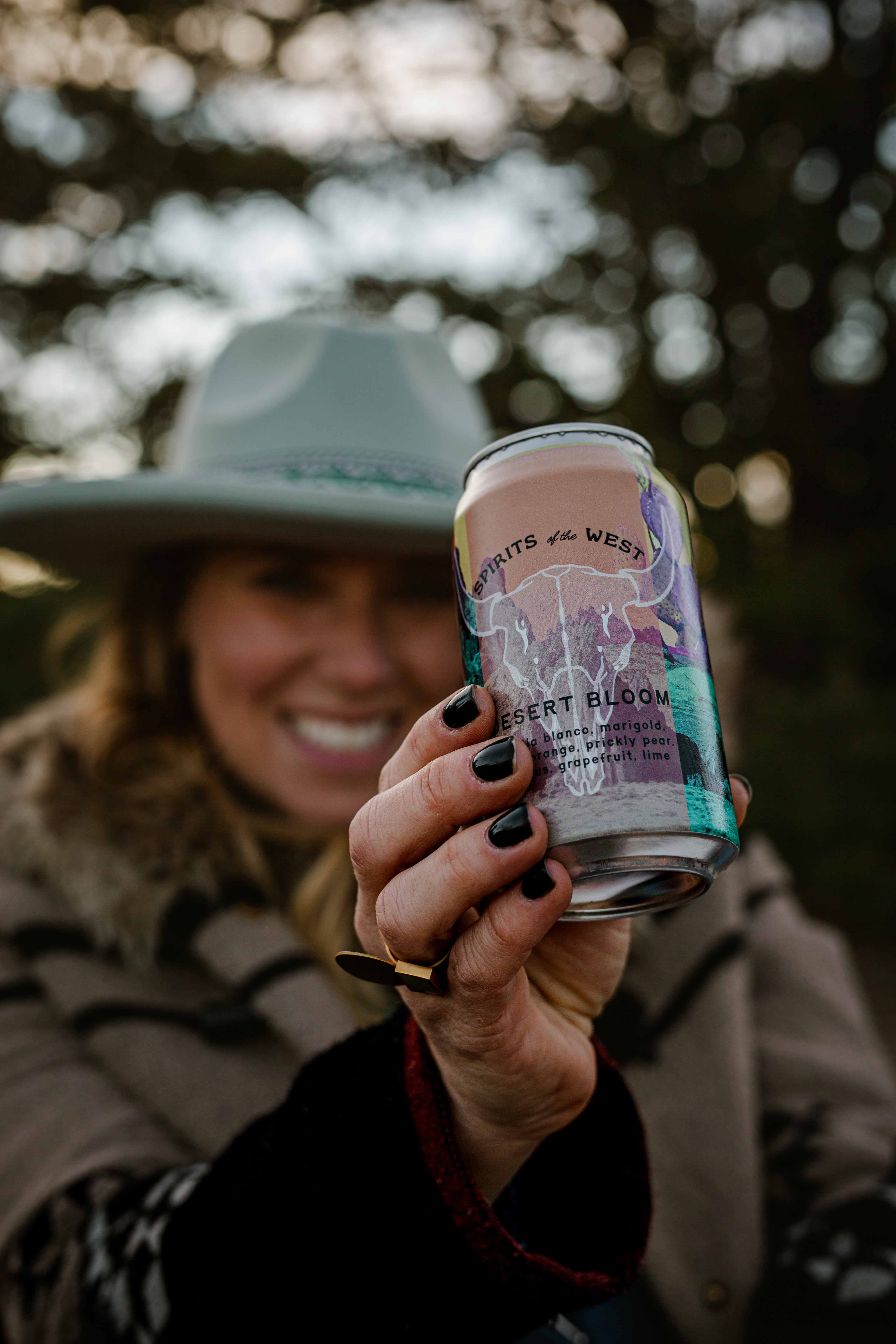
Spirits of the West exists because we asked a question: Could the experience of drinking a great cocktail exist in the outdoor spaces where we live, work and play?
Answering that question has led to hundreds more.
Some have been exciting. Some have been tedious. Some have been expensive. A few have made me question why I ever asked the first one.
But we keep asking.
We keep solving.
And when we think we've finally figured something out, inevitably there is another question waiting.
So, we go another round.
Comments